How to Measure Windows for Curtains: A Step-by-Step DIY Guide
You have bought the curtains for your place but it is only half the job done. You need to get the measurements right or else that expensive product will look awkward as it leaves gaps and will drag on the floor. Curtains that are too short will make a room look unfinished while narrow panels will leave the windows looking bare. So, how to take the right dimensions for your curtains? Well, today, we bring a DIY guide on how to measure your windows for curtains.
What You Need Before Measuring?
You need to have some basic items before you start with the measurement like:
- A metal tape to take accurate measurement readings
- A pencil and a paper to record those dimensions
- A step stool to climb for those higher points
- A helper to take readings for wide windows
You can take these measurements in centimeters or inches but you must stick to one unit of measurements.
Step By Step Guide On DIY Window Measurement For Curtains
Before you go on starting with the window measuring task, you need to decide, whether you need a curtain rod or a ceiling mounted track systems.
Step 1: Decide Where Your Curtains Will Hang
You need to make a decision of where your curtain hardware will sit. Curtains that are fitted inside a window recess, they will have different measurements from curtain hanging outside the frame.
1. Outside-mounted curtains
These drapes are fitted above and beyond your window frame and make it look taller and wider while covering more of the surrounding wall.
2. Inside-mounted curtains
This is going to sit within the window recess to allow for neat compact appearance but will leave less room for the fabric overlapping around the edges.
If it’s a full-length curtain, you must choose an outside mounted rod or track.
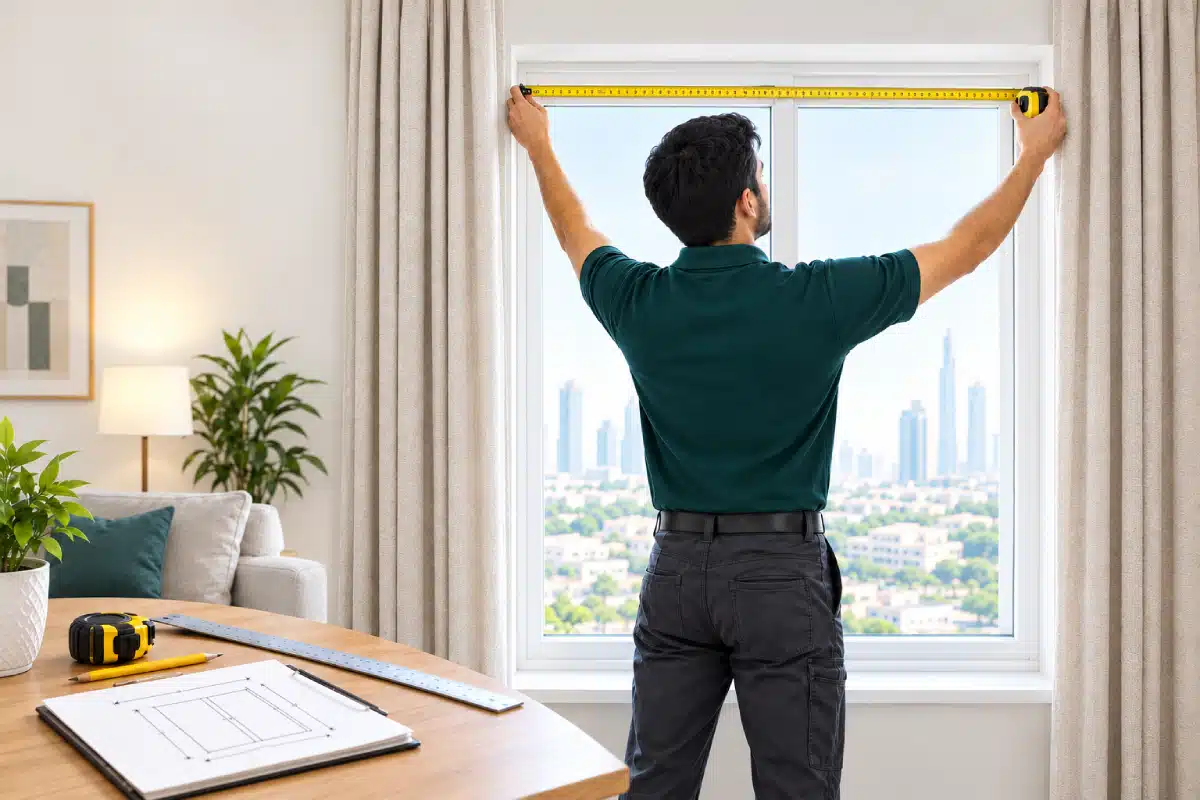
Step 2: Measure the Window Width
You should start by measuring the horizontal width of the window. If you are doing outside the frame fitting, measure the window from one outer edge to the other. The general starting point is about 15 cm to 20 cm beyond each side where the wall allows. For the wider extension on large windows, you can take the measurements with this certain rule:
Curtain hardware width = Window width + Left extension + Right extension
You need to measure the actual rod or track that you need to install instead of relying on the window’s measurements. For the inside mount fitting, measure the width of the recess on top, middle, and bottom.
Step 3: Measure the Curtain Length or Drop
The curtain drop will be the distance from one hanging point to the bottom edge of your drapery. The desired length will depend on whether your curtains need to be at the sill or stop just above the floor to kiss the floor. These are the three main curtain fitting styles that you can measure for.
(i). Sill length curtains that are ideal for fitting in compact rooms, and windows above furniture. You need to measure from the hanging point to the point where you need to stop, right above the sill.
(ii). Floor length draperies are perfect for bedrooms and living rooms. You must measure all the way to the floor and then subtract 1 cm to 2 cm to allow the fabric hanging neatly.
(iii). Puddle Length Dressings give the place a decorative appearance and the extra length to let the rest on the floors.
Step 4: Calculate How Much Curtain Fabric You Need
The right length for window curtains is also important but the width it’s what will determine whether your drapes look fuller and attractive. This fullness is how much fabric will be gathered across the rod or a track. The common starting point in 2 times the track width for a standard window drapery system. You can use this formula for reference to measure curtain length.
Total fabric width = Curtain track width × Fullness factor
Step 5: Consider Curtain Headings and Fabric
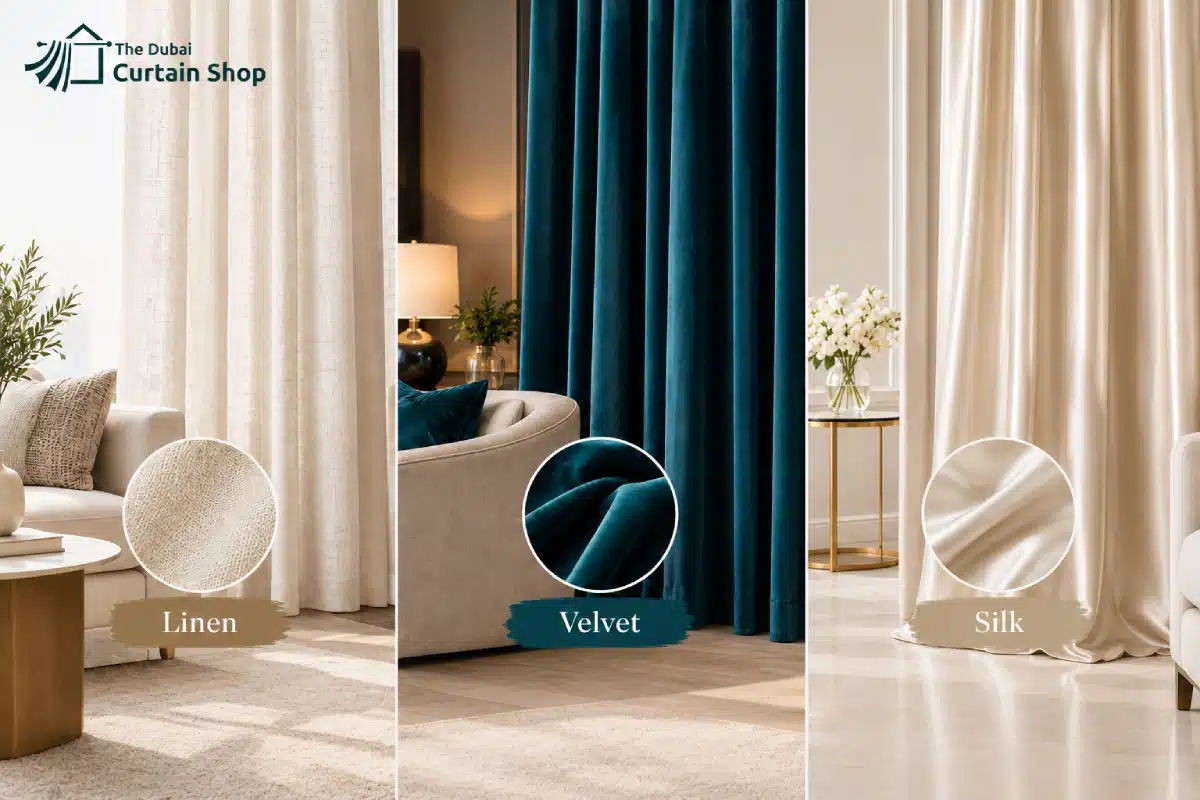
Not all draperies will hang in the same style as there are multiple header options like eyelet curtains, pinch pleats curtains, pencil pleats, and wave style. An eyelet drapery will sit directly on your pole while curtain fitted with hooks will hang just below the track. Fabric also affects those results like a heavy velvet or lined blackout drape will need the right hardware and enough space for a neat stacking. Lightweight sheers will need better fullness to allow for a soft, flowing fold look.
Step 6: Check Obstacles and Special Window Shapes
When you are about to finalize your measurements, you need to take a look at the entire window. Check for the air-conditioning, window handles, furniture, and nearby doors. These are all going to affect where the track will sit. If you have bay windows, corner windows, and wide sliding doors, you need to take extra attention. Measure each section of the bay window track individually and record its corners and angles. For a sliding door, you must ensure that the curtain will stack clear of the opening.
Final Thoughts
Taking the measurements for your window curtains is a simple DIY task when you plan it with right hardware position. You can do it correctly with our above step by step guide and note down dimensions. Focus on the actual curtain track or pole with right length and fullness before ordering your drapes. If it’s a big project with several rooms where you need installations for floor to ceiling, different fabric types, or others; you need to hire a professional help. A little preparation will make it easier to buy curtains that hang beautiful and work properly for years to come.